

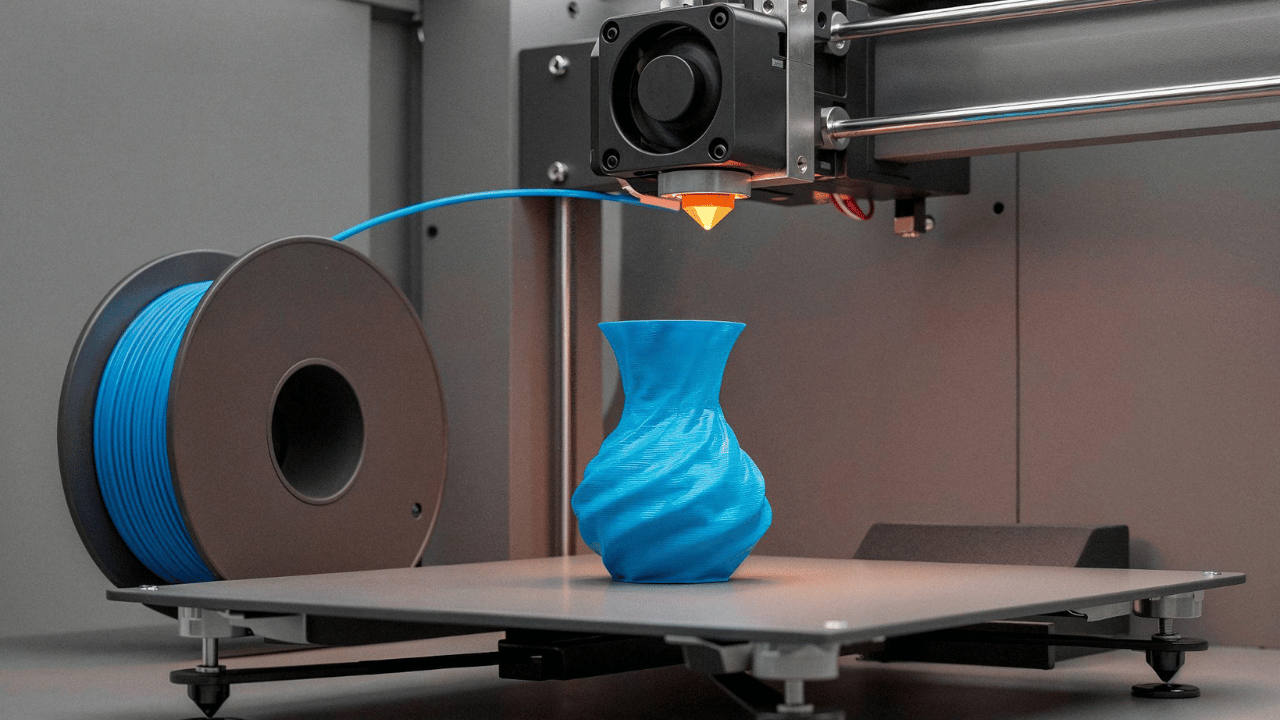
Rapid prototyping has changed how products are created, and custom 3D printing is at the center of this shift. Instead of waiting weeks for traditional models, teams can now turn ideas into real, testable parts in just days. This speed helps designers fix problems early, improve ideas faster, and save both time and money.
Custom 3D printing also gives more freedom to build complex shapes that were once hard to make. In this article, we’ll look at how it improves the prototyping process and why it has become a key tool for modern product development.
How Custom 3D Printing Rewires Product Development
This isn’t just about printing things faster. It’s about fundamentally changing when decisions get made and how quickly you can act on them.
Shrinking Development Cycles Before They Shrink You
Traditional manufacturing has a painful rhythm: submit drawings, wait on tooling, discover a flaw, wait again. Weeks dissolve. Budgets erode. By working with experienced rapid prototyping service providers near me, teams can compress that cycle from months down to literal days. You validated earlier. You iterate tighter.
You catch design problems while they’re still cheap to fix, before a mold shop has even quoted your job. Custom 3D printing with RapidMade makes this shift even more powerful by giving teams faster access to accurate, production-ready prototypes without long delays.
The real competitive edge isn’t just speed, though. It’s running multiple design variations in parallel while your competition is still waiting on quotes. That’s a different kind of advantage.
Design Freedom That Traditional Methods Simply Can’t Offer
Once you solve the timeline problem, you start appreciating what’s possible geometrically. Custom 3D printing handles complex internal channels, multi-material assemblies, and integrated moving parts with a level of cost efficiency that CNC machining and injection molding rarely come close to matching. Today’s custom 3D printed prototypes achieve tight tolerances that make functional testing genuinely meaningful, not just a visual check before you move on.
Understanding What Custom 3D Printed Prototypes Actually Cost
The financial picture surprises a lot of teams. Usually in their favor.
Weighing Cost Against Real Value
When you evaluate the cost of custom 3D printed prototypes, the number changes depending on your stage. MVP mockups, CMF samples, functional assemblies, and field-test units all carry different considerations. But compared to traditional tooling or machined parts, the savings tend to be significant, and that freed-up budget flows directly into better testing, stronger validation, and reduced production risk.
The Costs You Never See Coming, Until They Hit
Upfront pricing matters. But the stronger financial argument comes from what 3D printing prevents. Catch a critical flaw during prototyping, and you’ve avoided a failed production run, a delayed market launch, a regulatory rejection, sometimes all three at once. Waste reduction, faster approvals, and fewer costly do-overs add up quickly. That’s the math most teams underestimate when they’re comparing prototyping approaches.
How to Choose the Right 3D Printing Partner for Prototyping
Finding the best 3D printing services for prototyping isn’t just about who can run files. It’s about who can actually support your engineering work.
Look for providers offering genuine engineering guidance, advanced machinery across multiple technologies (SLA, SLS, MJF, DMLS), and a material library broad enough to match your performance requirements. Speed matters, but so does the ability to handle repeated, fast-turn iterations without sacrificing accuracy or part quality. A vendor who’s great at prints but weak on engineering support is only solving half your problem.
Materials Are Where Good Prototypes Become Great Ones
Material access often determines whether a prototype just looks right or actually performs right. Engineering-grade resins, fiber-reinforced composites, and direct metal printing have dramatically expanded what functional validation can tell you. When your prototype is built from materials that replicate production equivalents, the test data you get is genuinely predictive, not just encouraging.
Outsourcing Rapid Prototyping: A Strategy Worth Thinking Through
Build In-House or Partner Out? Here’s the Real Question
Teams tend to outsource rapid prototyping solutions when project demands are unpredictable, when specialized equipment isn’t available internally, or when they need engineering muscle alongside manufacturing capability. A hybrid model, digital development handled in-house, production outsourced, frequently delivers the best of both worlds without requiring significant capital investment upfront.
What Makes RapidMade Worth Considering
RapidMade brings a complete package to every engagement: fast turnaround times, a wide material selection, ISO 9001 certification, ITAR registration, and in-house engineering expertise. You’re not just receiving parts, you’re working with a team that functions as a genuine extension of your own engineering group. When it’s time to move from prototype to low-volume bridge production, that transition happens without switching vendors or rebuilding context from scratch.
Conclusion
Custom 3D printing has made rapid prototyping faster, smarter, and far more flexible for modern product teams. By reducing development time, lowering costs, and enabling complex design freedom, it helps businesses test, refine, and launch products with greater confidence. As industries continue to demand speed and precision, custom 3D printing is no longer optional but a strategic advantage in turning ideas into market-ready innovations.
FAQs on Custom 3D Printing for Prototyping
How accurate are custom 3D printed prototypes compared to finished products?
Modern printing technologies routinely achieve tolerances within ±0.1mm depending on the chosen process. Functional prototypes built from engineering-grade materials closely replicate final product behavior, reliable for testing and stakeholder sign-off alike.
Can 3D printed prototypes serve as actual end-use parts?
Absolutely. Engineering-grade resins, nylon composites, and metal-printed components regularly function as end-use parts across aerospace, medical, and industrial applications. Performance ultimately comes down to material selection and print process.
How do prototyping service providers handle IP protection?
Reputable providers use NDAs, secure data-handling protocols, and, where applicable, ITAR registration to protect sensitive designs. Always confirm confidentiality terms before sharing proprietary CAD files with any vendor.