
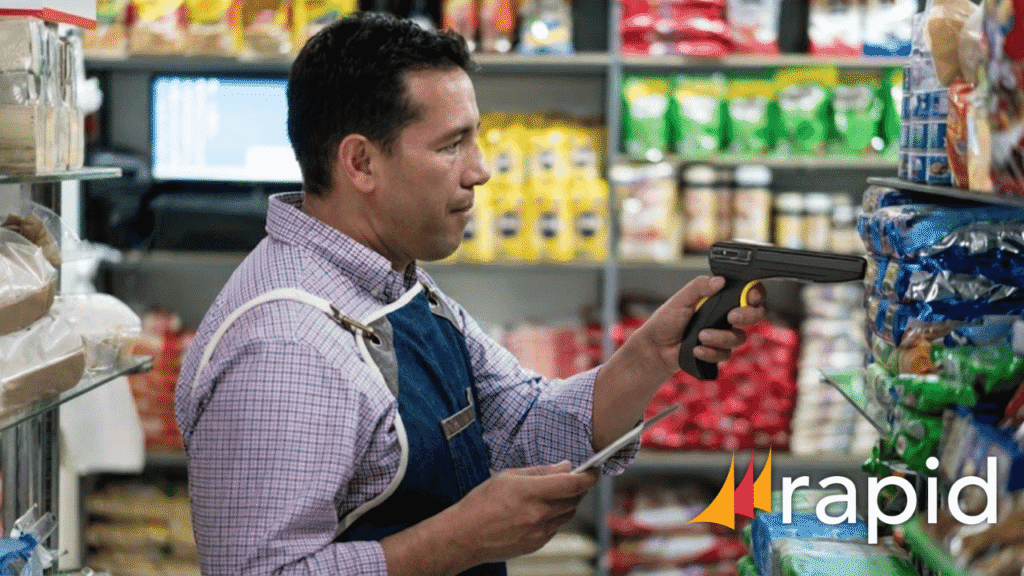

Modern grocery stores use all sorts of technology to make the process of selling groceries smoother and easier. Things like smart labels, a grocery POS system and all sorts of other retail technology solutions are very common in modern grocery stores. These bits of technology are designed not only to make running a store easier, but also to make shopping at one an experience with less friction than previously.
If you tried to manage a modern grocery store the same way as was done in the past, by manually going to every item on every shelf and applying stickers and labels to denote the price, you might well go mad. Even small grocery stores are likely to carry thousands of different products, have supplier costs that change from month to month, shifts in demand that change by the season and the need to offer competitive promotions to keep up with other stores in the area or network. In this environment, management of pricing can become a nightmare, but not if you use the proper tools.
There is a wide range of technological tools that modern grocery store owners and managers are using to keep up with the day to day minutea of running the store. Using advanced retail technology solutions like custom grocery POS software and other tools that apply a level of automation to everyday systems is a must. These innovations allow grocery stores to function in an adaptable, efficient and modern way, and are designed to improve the customer and employee experience greatly.
Let’s take a closer look at some of the complexities that plague modern grocery store management and at the technological tools that simplify these complexities.
Grocery Pricing at Scale is Annoyingly Complex
Even a relatively small supermarket can easily carry ten thousand different individual products; larger supermarkets may see that figure balloon to fifty or seventy thousand, easily. Every one of these items requires a range of different pricing variables to be handled, such as:
- The base retail price.
- Potential promotions.
- Specific offers for bulk or multiple purchases.
- Seasonal adjustments.
- Regional adjustments.
- Changes to supplier costs.
While this might not seem like a lot, if this has to happen manually for twenty thousand different products, on a regular basis, well, you can start feeling like Sisyphus pretty quickly. Managing this sort of upkeep without the right tools is incredibly time-consuming, and even the most practiced employee can easily make errors, which could lead to all sorts of issues for customers and for your bottom line.
Using a retail price management system can make a lot of the headache of managing the complexity of price scaling go away. Automated price workflows, when centralized, allow for consistent application of prices across the entire store ecosystem.
Why Are Centralized POS Systems So Useful?
The most useful tool for a modern grocery store looking to manage its pricing is the grocery POS system. These systems act as a hub, a connected system to streamline operations, allowing for management of pricing, inventory and transactions all from a single point. By using centralized platforms like the Rapid Grocery POS, stores can do away with manual entry of data and instead perform instant store-wide updates.
Having a system that allows for price changes made by a single centralized interface has a range of benefits, such as:
Dynamic Real-Time Price Changes
By far the most important function that supermarket POS software enables is the ability for price changes to be made dynamically and instantly. Seasonal offers, discounts and promotions can be applied across the whole store in a matter of moments. This enables stores to be adaptable in running weekend promotions or otherwise being responsive in what can be a competitive modern retail environment.
Using Automation to Prevent Errors
Even the most dedicated and experienced worker is likely to make mistakes when faced with the sheer volume of work needed to keep a modern grocery store up to date with pricing. POS pricing automation helps to ensure that this sort of humdrum work is taken out of the hands of capable workers, allowing them to get on with more important tasks, and ensuring that there are fewer errors made in relation to pricing.
Systems that Offer Operational Unity
Most POS systems and modern grocery store operations software are not designed to do just one thing. These systems are designed to integrate with a host of other core grocery store systems and functions, such as reporting dashboards or inventory management. This means that when pricing decisions are being made, they can be made with reference to real-time data that is gathered by other systems, but all inside the same interface.
Accurate Pricing is More Important Now Than Ever
For most modern grocery stores, the most important thing to their continued success is customer trust. This means that if a situation arises where a customer sees one price on the shelf, but is met with a different price at the register, they are likely to simply shop elsewhere in future.
Automated retail pricing management systems can help stores to avoid this issue, as they make sure all pricing data across the entire store ecosystem is synchronized.
From the point of view of business management, this means that profit margins can also be more easily protected. If a pricing error occurs, even a small one, often enough, it is going to hurt the business’s bottom line. Grocery pricing software stops these small issues from occurring at all.
Are Smart Retail Systems the Future?
For those who are looking into what the future may hold for supermarkets, smart retail systems are very much on the menu. These systems will provide more than POS functionality and price control across a store; they will use a host of advanced features, like:
- Automated planning of promotions.
- Forecasted demand management, driven by AI tools.
- Price optimization through data analytics.
- Digital shelf labels that are integrated into these other functions.
The idea behind many of these smart retail systems is that they will enable retailers to use proactive pricing strategies, rather than being merely reactive.
Supply Chain and Inventory Integration
Anyone who has any business acumen at all will be aware that grocery stores don’t set their prices willy nilly, they set their prices in response ot the laws of supply and demand and as the supply chain dynamics allow. Grocery store operations software can have integration that allows for pricing decisions to be made in ways that best align with current levels of stock and current cost of being re-supplied.
For example:
- Items that are overstocked can be flagged to be discounted, instead of going to waste.
- Products approaching expiry on shelves can receive large markdowns.
- The cost of a product rising with a supplier can trigger in-store price adjustments.
As integration like this gets higher, losses can be minimized and profit can be maintained across the store.
Final Thoughts
While managing all of the tens of thousands of products that could be on offer and in need of pricing management in a modern grocery store is a daunting prospect, technology is here to save us. Using tech like smart retail systems, centralized POS systems, and other sorts of automation tools allows managers of grocery stores to improve the level of efficiency, remain adaptable and keep a high level of accuracy.