
Businesses used to buy servers years in advance, guessing how much computing power they’d eventually need. On demand computing flips that model entirely — you access exactly the resources you need, exactly when you need them, and pay only for what you actually use. This guide covers how it works, real examples in use today, and where it makes sense for your business.
Key Takeaways
- On demand computing lets businesses access computing resources — storage, processing power, or software — instantly, as needed, without owning the underlying infrastructure
- It’s typically billed on a pay-as-you-go basis, so costs scale directly with actual usage rather than a fixed upfront investment
- Major providers like AWS, Microsoft Azure, and Google Cloud are built almost entirely around the on demand computing model
- The biggest benefits are cost efficiency and scalability; the biggest trade-offs are variable monthly costs and reliance on a stable internet connection
- On demand computing is a foundational piece of on demand cloud computing more broadly, powering everything from streaming platforms to AI workloads
What Is On-Demand Computing?
On demand computing is a model where businesses access computer system capabilities — such as processing power, storage, or software — as needed and on a pay-as-you-go basis, rather than purchasing and maintaining that infrastructure themselves. Instead of investing heavily in physical servers and hardware upfront, companies can request additional computing resources instantly when demand rises, and scale back down just as easily when it drops.
This is a significant shift from traditional IT infrastructure planning, where businesses had to estimate future needs years in advance and purchase enough hardware to cover peak demand — even if that capacity sat unused most of the time. On demand computing removes that guesswork by letting resources flex directly with actual usage.
How Does On-Demand Computing Work?
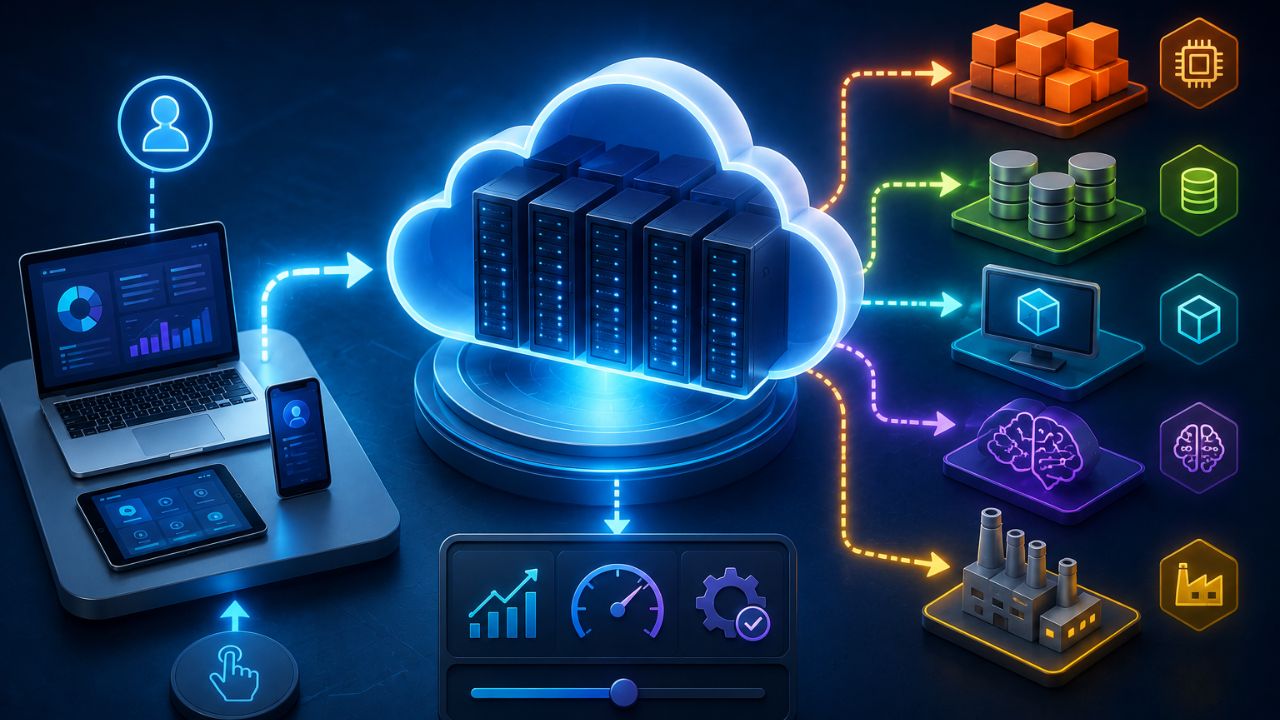
On demand computing works by pooling computing resources — servers, storage, and networking — in large data centers operated by a cloud provider, then allocating those resources to customers instantly through automated, self-service systems whenever they’re requested. When a business needs more processing power, it doesn’t wait for new hardware to be installed; it simply requests additional capacity through a dashboard or API, and the provider allocates it within seconds or minutes.
This is made possible by virtualization technology, which allows a single physical server to be divided into many independent virtual machines, each allocated to a different customer or workload. The provider manages the underlying hardware, while customers interact only with the virtual resources they’ve requested — which is also the same underlying principle behind why so many businesses have moved core operations to the cloud over the past decade.
On-Demand Computing vs. Traditional IT Infrastructure
The core difference between on demand computing and traditional IT infrastructure is ownership and flexibility: traditional infrastructure requires businesses to purchase, install, and maintain their own hardware based on estimated future needs, while on demand computing lets businesses rent exactly the capacity they need, exactly when they need it, from a third-party provider.
| Factor | On-Demand Computing | Traditional IT Infrastructure |
|---|---|---|
| Upfront cost | Low — no hardware purchase required | High — significant capital investment |
| Scalability | Instant, self-service scaling | Slow — requires purchasing and installing new hardware |
| Cost model | Pay-as-you-go, usage-based | Fixed cost regardless of usage |
| Maintenance | Handled by the provider | Handled in-house by IT staff |
| Best for | Variable or unpredictable workloads | Highly stable, predictable, long-term workloads |
Real Examples of On-Demand Computing
On demand computing shows up in far more places than most people realize — it’s the model behind nearly every major cloud platform and many of the apps people use daily. A few concrete examples include:
- Cloud infrastructure platforms. Amazon Web Services (AWS), Microsoft Azure, and Google Cloud all let businesses spin up virtual servers, storage, and databases instantly, paying only for the compute time actually used.
- Streaming services. Platforms like Netflix rely on on demand computing to automatically scale server capacity up during peak viewing hours and back down overnight, without maintaining fixed infrastructure sized for the busiest possible moment.
- AI and machine learning workloads. Training an AI model requires enormous, short-term bursts of processing power — on demand computing lets companies rent that capacity for the duration of the training run instead of buying dedicated hardware that would sit idle afterward.
- Software-as-a-Service (SaaS) tools. Many business software platforms run entirely on on demand cloud computing infrastructure behind the scenes, scaling capacity automatically as more customers use the platform.
- Seasonal e-commerce scaling. Online retailers often lean on on demand computing to handle traffic spikes during major sales events, then scale back down once demand returns to normal.
What Are the Benefits of On-Demand Computing?
The main benefit of on demand computing is cost efficiency paired with flexibility — businesses avoid large upfront hardware investments and instead pay only for the resources they actually consume, which can scale instantly in either direction. Other notable benefits include:
- Faster time to deployment. New computing resources can be provisioned in minutes instead of the weeks or months it might take to procure and install physical hardware.
- Built-in scalability. Businesses can handle unexpected traffic spikes without over-provisioning capacity “just in case,” which also strengthens overall infrastructure resilience during high-demand periods.
- Reduced maintenance burden. The provider handles hardware upkeep, security patching, and physical infrastructure, freeing internal IT teams to focus on higher-value work.
- Global accessibility. Resources can typically be accessed from anywhere, which supports distributed teams and geographically diverse customer bases.
What Are the Drawbacks of On-Demand Computing?
The main drawback of on demand computing is cost unpredictability — because billing is usage-based, costs can spike unexpectedly during high-demand periods if usage isn’t actively monitored and managed. Other limitations worth considering include:
- Ongoing internet dependency. Since resources are accessed remotely, a poor or unstable internet connection directly affects performance and availability.
- Vendor lock-in risk. Deep integration with one provider’s specific tools and services can make it costly or complex to migrate to a different provider later.
- Less predictable long-term budgeting. Fixed infrastructure costs are easier to forecast years in advance than usage-based billing, which fluctuates with demand.
Is On-Demand Computing the Same as Cloud Computing?
On demand computing and cloud computing are closely related but not identical — on demand computing describes the pay-as-you-go, instant-access model itself, while cloud computing is the broader delivery method (internet-based, provider-managed infrastructure) that makes on demand computing possible at scale. In practice, the terms are often used interchangeably, since virtually all modern cloud platforms — including those covering recent releases like Oracle Cloud’s latest updates — are built around on demand principles by default.
Frequently Asked Questions
Q: What is on demand computing in simple terms?
On demand computing means accessing computer resources like processing power, storage, or software instantly whenever you need them, and paying only for what you actually use, rather than owning and maintaining that infrastructure yourself.
Q: What is on demand cloud computing?
On demand cloud computing refers specifically to on demand resources delivered through cloud platforms like AWS, Azure, or Google Cloud, where businesses access virtualized infrastructure over the internet instead of physical, on-premises hardware.
Q: What is an example of on demand computing?
A common example is a business using AWS to automatically scale up server capacity during a traffic spike and scale back down afterward, paying only for the extra compute time actually used during that spike.
Q: Is on demand computing cheaper than owning your own servers?
For variable or unpredictable workloads, on demand computing is often cheaper since it avoids large upfront hardware costs; for highly stable, constant workloads running 24/7 for years, owning infrastructure can sometimes be more cost-effective long-term.
Q: What industries use on demand computing the most?
Industries with variable or unpredictable demand — such as e-commerce, streaming media, software-as-a-service, and AI/machine learning — tend to rely heavily on on demand computing to handle fluctuating workloads efficiently.
Q: Do I need technical expertise to use on demand computing?
Basic use of on demand computing platforms has become increasingly accessible through simplified dashboards, but efficiently managing costs, security, and scaling at a larger business level generally still benefits from dedicated IT or cloud engineering expertise.
Final Thoughts
On demand computing solved a problem businesses had lived with for decades: guessing how much computing capacity they’d need years in advance, then either over-paying for unused capacity or scrambling when they underestimated demand. By shifting to a pay-as-you-go, instantly scalable model, companies of nearly any size can now access enterprise-grade computing power exactly when they need it — no upfront hardware investment required.
If your business is weighing whether to shift more workloads to this model, it’s worth pairing that decision with a broader look at how cloud technology is reshaping day-to-day operations across entire departments, not just IT.