

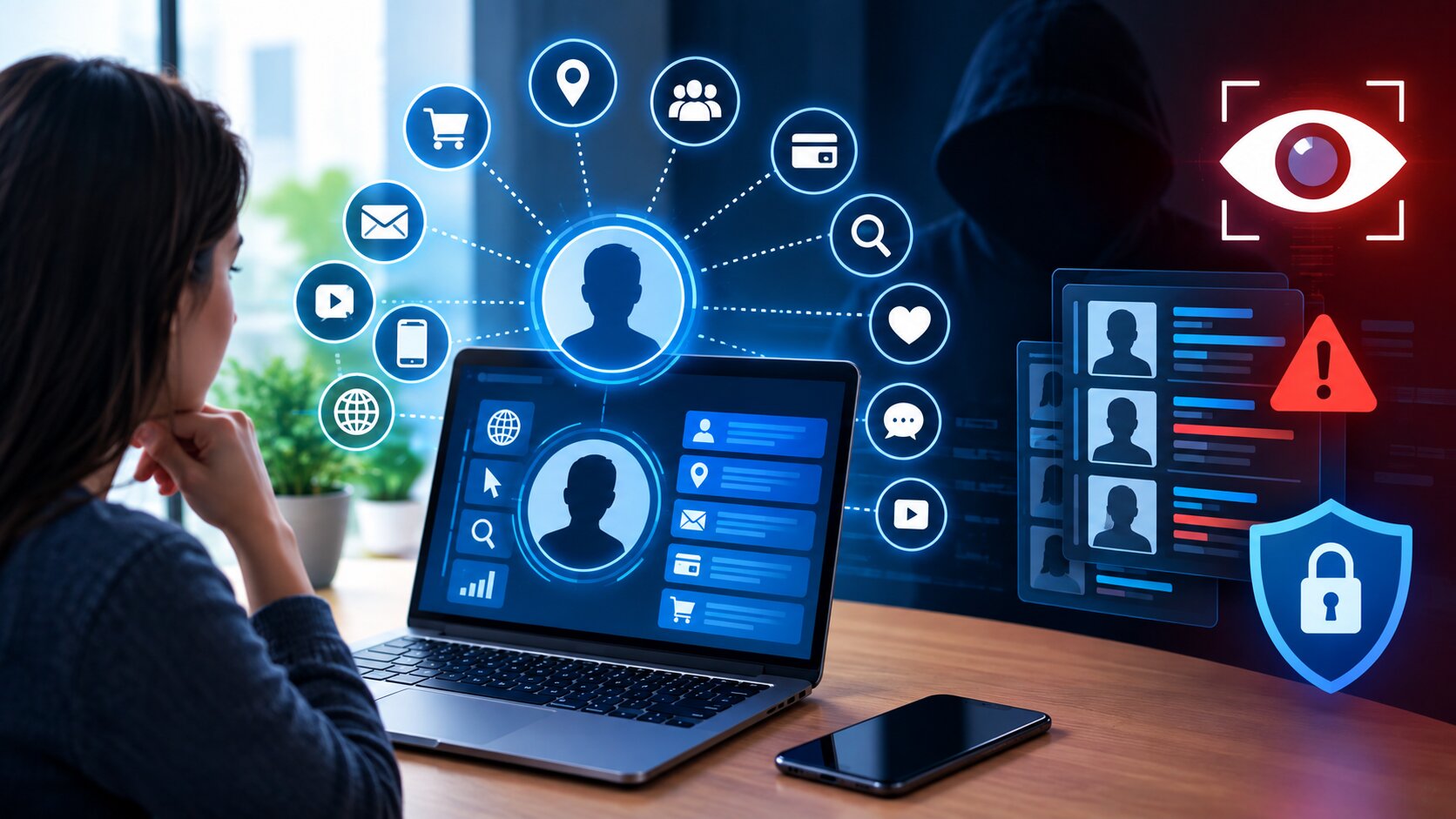
Every click, purchase, and search builds a picture of who you are, whether you realize it or not. Companies piece that picture together automatically, then use it to make decisions about you. That’s electronic profiling. Here’s how it actually works, what data feeds it, and what you can realistically do to limit it.
Key Takeaways
- Electronic profiling means automatically collecting and analyzing personal data to build a digital profile of an individual.
- It draws from browsing history, purchase behavior, location data, and social media activity.
- Profiles get used for targeted advertising, credit decisions, and increasingly, AI-driven personalization.
- Regulations like GDPR give people specific rights over how their data gets profiled.
- Electronic profiling connects closely to broader concerns around identity theft and AI governance.
What Is Electronic Profiling?
Electronic profiling is the automated process of collecting and analyzing personal data to build a detailed digital profile of an individual, often used to predict behavior, preferences, or risk. This profile might include demographic details, purchasing habits, browsing patterns, and even inferred traits the person never directly shared. Privacy research consistently shows the average internet user gets tracked by dozens of different data collection systems across a single day of normal online activity. Related concepts include data brokers, behavioral targeting, algorithmic decision-making, and the “right to explanation” under privacy regulations.
In simple terms, electronic profiling takes scattered pieces of data, a search here, a purchase there, a location check-in somewhere else, and assembles them into a surprisingly complete picture of a person.
What Data Feeds Electronic Profiling
Profiling systems draw from a wide range of data sources, often combining information a person never expected to be connected.
- Browsing and search history — Websites visited, search queries entered, and time spent on specific content.
- Purchase behavior — What you buy, how often, and at what price points, both online and increasingly through connected loyalty programs.
- Location data — GPS data from mobile apps, Wi-Fi connections, and even payment locations that reveal movement patterns.
- Social media activity — Posts, likes, follows, and connections, which reveal interests and social networks.
- Device and technical data — Device type, operating system, and browser fingerprinting, which can identify and track a person even without cookies.
How Companies Use Electronic Profiles
Targeted advertising
The most visible use of profiling shows ads tailored to inferred interests, purchase likelihood, or life stage, often with unsettling accuracy.
Credit and risk decisions
Financial institutions increasingly use alternative data profiles, beyond traditional credit history, to assess lending risk, sometimes in ways that lack transparency.
AI-driven personalization
Streaming services, retailers, and content platforms use profiles to personalize recommendations, which can create a useful experience but also reinforces certain patterns of exposure.
Price discrimination
Some companies adjust pricing or offers based on a profile’s inferred willingness to pay, a practice that remains legally gray in many jurisdictions.
The Real Privacy Risks
“The danger with electronic profiling isn’t any single data point. It’s the combination. Individually, your zip code and your shopping habits seem harmless. Combined with dozens of other signals, they can predict things about you that you never chose to share.” — Elena Vasquez, Privacy and Data Protection Researcher, Digital Rights Policy Institute, 2025.
Electronic profiling creates risk beyond simple annoyance. Combined data points can reveal sensitive inferences, health conditions, financial stress, or political leanings, that a person never explicitly disclosed. This data also becomes a target for attackers, since compiled profiles are valuable for identity theft and social engineering. As AI systems increasingly make automated decisions based on these profiles, questions around governance and accountability become more pressing.
Your Privacy Rights Around Profiling
| Regulation | Key Right | Region |
|---|---|---|
| GDPR | Right to explanation, right to object to profiling | European Union |
| CCPA/CPRA | Right to opt out of sale/sharing of personal data | California, USA |
| Other state privacy laws | Varying rights to access, delete, and limit data use | Growing number of U.S. states |
How to Limit Your Electronic Profile
- Review app permissions regularly — Check which apps have access to location, contacts, and browsing data, and revoke permissions that aren’t actually necessary.
- Use privacy-focused browser settings — Enable tracking protection and consider browser extensions that block third-party trackers and fingerprinting.
- Opt out where regulations allow — Exercise your rights under GDPR, CCPA, or applicable state laws to limit data collection and profiling.
- Limit social media data sharing — Adjust privacy settings and think carefully about what personal details get posted publicly.
- Use separate accounts for sensitive activities — Avoid linking accounts across services when possible, since cross-platform data linking significantly strengthens profiling accuracy.
Frequently Asked Questions
Is electronic profiling illegal?
Not inherently. Many forms of profiling are legal, though regulations like GDPR require transparency and give individuals rights to object, particularly for automated decisions with significant effects.
Can I find out what data companies have profiled about me?
Often, yes. Many jurisdictions grant a right to access personal data companies hold, and larger platforms typically provide tools to view or download collected data.
Does deleting cookies stop electronic profiling?
Only partially. Modern profiling techniques, like device fingerprinting, can identify and track users even without cookies, so cookie deletion alone doesn’t fully prevent profiling.
How does electronic profiling relate to credit scores?
Some lenders now use alternative data profiles alongside or instead of traditional credit scores, incorporating behavioral and transactional data that traditional credit bureaus don’t capture.
Can businesses legally sell profiling data to third parties?
In many regions, yes, though regulations increasingly require disclosure and opt-out options, particularly under laws like the CCPA, which specifically addresses the sale of personal data.
Conclusion
Electronic profiling operates quietly in the background of nearly every online interaction, assembling scattered data points into a detailed picture that shapes the ads you see, the prices you’re offered, and increasingly, decisions made about you automatically. Understanding what feeds these profiles, and exercising the privacy rights available in your region, gives you real, if limited, control over how much of that picture gets built without your active input.
For related reading, see our guides on identity theft prevention, AI governance and decision-making, and what a virtual CISO does.