
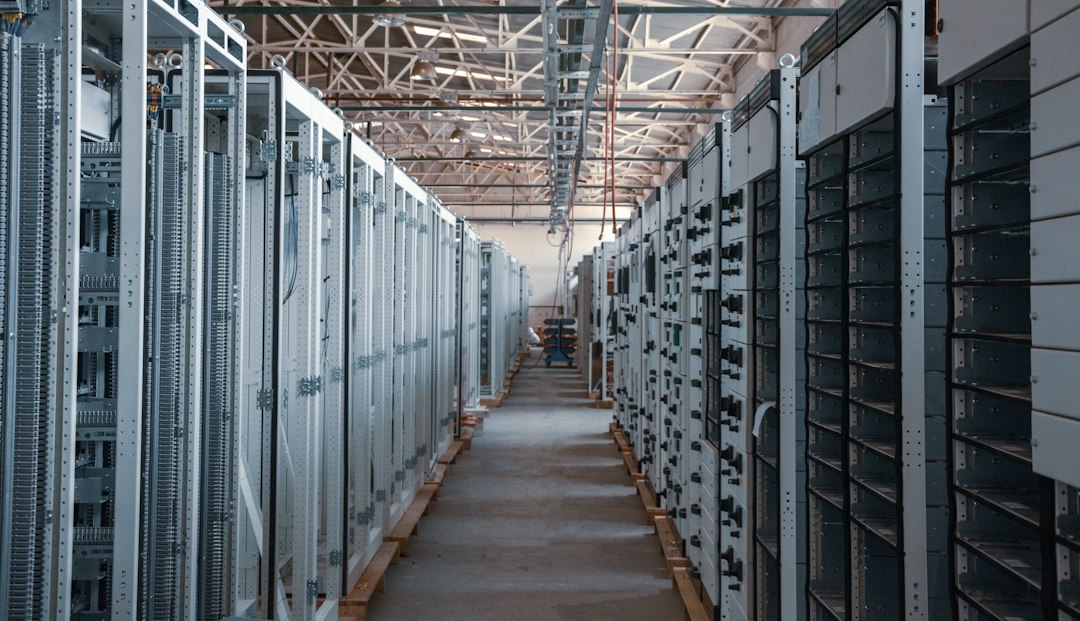
A wholesale data center is a facility where a customer leases a large block of space and power, such as a private suite, a whole data hall or an entire building, instead of renting individual racks. It suits organizations with large, predictable capacity needs, such as cloud providers, big enterprises and content companies. Retail colocation, by contrast, rents smaller units like racks or cages to many tenants.
Key takeaways
- Wholesale data centers lease capacity in bulk, usually measured in megawatts or large power blocks, under long-term contracts.
- Retail colocation rents racks, cabinets or small cages and includes more services, such as remote hands and connectivity.
- Wholesale typically lowers the cost per kilowatt at scale, but needs larger commitments and more in-house operations.
- Tenants often control their own design, security and equipment layout inside the leased space.
- Choose by power need, growth plan, budget and how much of the operation you want to run yourself.
What is a wholesale data center?
A wholesale data center provider builds and operates the facility, including building shell, power, cooling and physical security, and leases large sections to tenants. The tenant brings servers, storage and network equipment and often runs day-to-day operations. Because capacity is sold in bulk, pricing is usually based on committed power, such as dollars per kilowatt per month, rather than per rack.
Wholesale vs retail colocation: what is the difference?
The main difference is scale and service level. Wholesale sells large blocks of power and space on long leases with fewer included services, while retail colocation sells small units with more services and flexible terms. The table shows how they compare.
| Feature | Wholesale data center | Retail colocation |
|---|---|---|
| Unit of purchase | Private suite, hall, floor or building | Rack, cabinet or small cage |
| Typical size | Large power blocks, often hundreds of kilowatts to many megawatts | A few kilowatts per rack up to small cages |
| Pricing basis | Committed power, often per kW per month | Per rack or cabinet, plus power and services |
| Contract length | Long, often multiple years | Shorter and more flexible |
| Customization | High: layout, containment, security and design inputs | Limited to your rack or cage |
| Services included | Basic: power, cooling, building security | Broader: remote hands, connectivity, support |
| Operations | Tenant runs most IT operations | Provider can help with more tasks |
| Best for | Hyperscale, large enterprise, content and cloud providers | Small and mid-size deployments |
What are the benefits of a wholesale data center?
The main benefits are lower unit cost at scale, control and room to grow. Key advantages are:
- Lower cost per kilowatt. Buying power and space in bulk usually costs less per unit than retail racks.
- Design control. Tenants can choose rack layout, containment, power distribution and security within the suite, for example using hot and cold aisle designs.
- Scalability. Many providers offer expansion options next to your space, so you can grow without moving.
- Higher density. Suites can support high-density racks and special cooling if the building allows it.
- Dedicated environment. A private suite gives more privacy and isolation than a shared hall.
What are the drawbacks?
The drawbacks are higher commitments and more responsibility. Consider these points:
- Large upfront commitment. Long leases and minimum power commitments are normal.
- More work for your team. You may need to manage installation, monitoring, cleaning and maintenance, or buy those services separately. See our data center cleaning standards checklist.
- Less flexibility. It is harder to scale down or leave early than with retail colocation.
- Fewer built-in services. Remote hands, connectivity and managed services may cost extra.
- Capital outlay. You buy and install the electrical and mechanical equipment inside your suite, such as PDUs, racks and sometimes cooling units like a CRAC unit.
When should you choose wholesale?
Choose wholesale when your power need is large and predictable, you have a team that can run the space and you want control over the design. Choose retail colocation when you need a few racks, quick start and included services. A hybrid approach is also common, with a wholesale core and retail colocation at edge locations. For help in the gaps, consider a remote hands service.
How do you evaluate a wholesale data center provider?
To evaluate a provider, check power, resilience, security, connectivity and contract terms. Use this checklist:
- Power capacity and expansion. Confirm the committed megawatts, the growth options and the utility supply.
- Redundancy. Ask about the power and cooling design and the availability track record. Compare to concepts in high availability.
- Cooling and density. Check the maximum density per rack and the cooling methods supported.
- Security and compliance. Review physical security and the certifications you need.
- Connectivity. Check carrier options and cloud on-ramps.
- Location and risk. Consider disaster exposure, latency and power cost.
- Contract terms. Review length, escalation, power pricing, service levels and exit options.
- Operations plan. Decide who handles installation, maintenance and moves. Use our data center migration checklist when you move in.
Frequently asked questions
What is the difference between wholesale and retail colocation?
Wholesale leases large blocks of space and power on long contracts with fewer services. Retail colocation rents racks or cages with more services and flexible terms.
How big is a wholesale data center lease?
It varies by provider, but wholesale deals usually start at larger power blocks than retail, often hundreds of kilowatts or more, and can reach many megawatts. Ask each provider for its minimum commitment.
Is wholesale cheaper than retail colocation?
Usually the cost per kilowatt is lower at scale, but total cost is higher because you commit to more capacity and handle more operations yourself.
Who uses wholesale data centers?
Cloud providers, large enterprises, content and streaming companies, and other organizations with large, steady infrastructure needs.
Can I start with retail colocation and move to wholesale?
Yes. Many companies start with retail colocation and move to wholesale as their power needs grow. Plan the move carefully to avoid downtime.
Conclusion
A wholesale data center gives large, predictable workloads lower unit cost, more control and room to grow, in exchange for bigger commitments and more operational work. Compare it with retail colocation and building your own, check the provider details closely and match the choice to your power needs and team skills.